
By Comprehensive Podiatry Associates, P.C. Foot Specialists
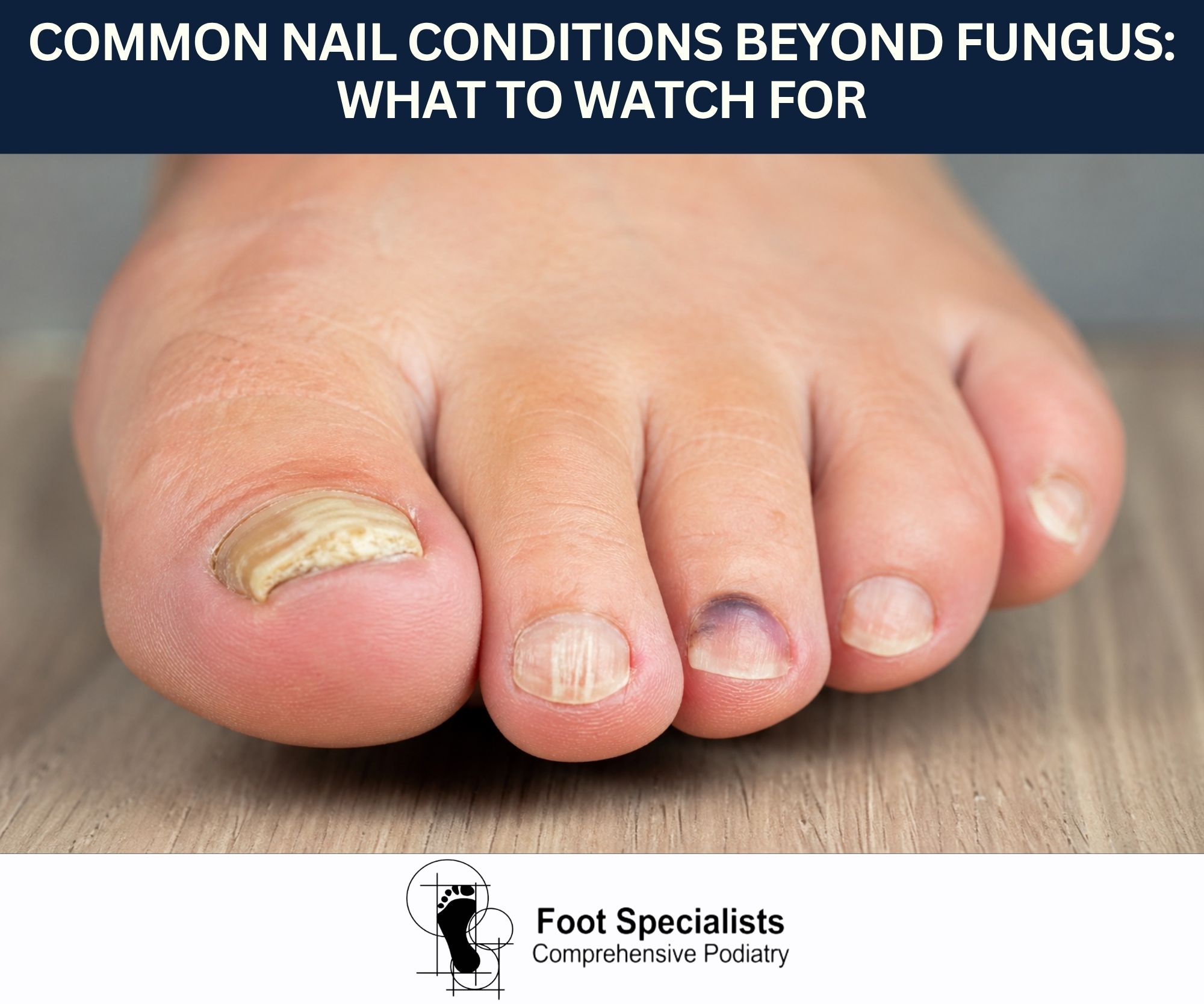
When people notice changes in their toenails—discoloration, thickening, brittleness—the first assumption is often a fungal infection. While fungal nails (onychomycosis) are common, they are far from the only cause of nail abnormalities. In fact, many nail conditions can mimic fungus, and misdiagnosis can delay proper treatment.
At Comprehensive Podiatry Associates, P.C. Foot Specialists, we believe patient education is key to maintaining healthy feet. Below, we explore common nail conditions beyond fungus, what symptoms to watch for, and when to seek expert care.
Why Nail Health Matters
Your nails can reveal a lot about your overall health. Changes in color, texture, or growth patterns may indicate underlying issues such as trauma, infections, systemic diseases, or even skin conditions. Early evaluation by a podiatrist ensures accurate diagnosis and effective treatment.
Common Nail Conditions (Beyond Fungus)
1. Ingrown Toenails (Onychocryptosis)
Ingrown toenails occur when the nail edge grows into the surrounding skin, causing pain, redness, and sometimes infection.
Common causes:
- Improper nail trimming
- Tight footwear
- Genetic nail shape
Warning signs:
- Tenderness along the nail edge
- Swelling or pus
- Pain when walking
2. Nail Psoriasis
Psoriasis doesn’t just affect the skin—it can also impact the nails.
Symptoms include:
- Pitting (small dents in the nail surface)
- Thickened or crumbly nails
- Yellow-brown discoloration
This condition is often mistaken for fungus but requires entirely different treatment.
3. Trauma-Induced Nail Damage
Repeated pressure or injury (like stubbing your toe or wearing tight shoes) can lead to nail changes.
Signs to watch for:
- Dark discoloration (subungual hematoma)
- Nail lifting from the nail bed
- Thickened or deformed nails
Athletes and runners are especially prone to this condition.
4. Paronychia (Nail Fold Infection)
Paronychia is an infection of the skin around the nail, caused by bacteria or yeast.
Symptoms:
- Redness and swelling around the nail
- Pain and warmth
- Possible drainage
It can be acute (sudden) or chronic (long-lasting).
5. Nail Clubbing
Nail clubbing causes the nails to curve downward and the fingertips to enlarge.
Potential underlying causes:
- Lung disease
- Heart conditions
- Gastrointestinal disorders
This condition should always be evaluated promptly, as it may signal systemic health issues.
6. Beau’s Lines
These are horizontal grooves across the nail that occur when nail growth is temporarily interrupted.
Common triggers:
- Illness or high fever
- Injury
- Nutritional deficiencies
7. Melanonychia (Dark Pigmentation)
Dark streaks or bands in the nail may be benign—but in some cases, they can indicate serious conditions like melanoma.
Important note:
Any new or changing dark pigmentation should be evaluated immediately.
When to See a Podiatrist
You should schedule an evaluation if you notice:
- Persistent nail discoloration
- Pain or swelling around the nail
- Thickened or distorted nails
- Changes that don’t improve with home care
- Dark streaks or unusual pigmentation
Accurate diagnosis is essential—what looks like fungus could be something entirely different.
Expert Nail Care You Can Trust
At Comprehensive Podiatry Associates, P.C. Foot Specialists, our experienced team provides advanced diagnostic tools and personalized treatment plans for all nail conditions. Whether it’s a simple ingrown nail or a complex medical issue, we’re here to help restore your foot health.
Frequently Asked Questions (Q&A)
Q: How can I tell if my nail problem is not fungus?
A: Fungal infections typically cause thick, yellow, brittle nails. However, conditions like psoriasis or trauma may look similar. A professional evaluation, often including lab testing, is the best way to confirm.
Q: Are nail conditions dangerous?
A: Some are minor, but others—like infections or suspicious pigmentation—can become serious if left untreated. Early diagnosis is key.
Q: Can nail conditions heal on their own?
A: Minor trauma may resolve over time, but many conditions require medical treatment to fully heal and prevent complications.
Q: What should I do if I have a painful ingrown toenail?
A: Avoid cutting it yourself. Improper care can worsen the condition. A podiatrist can safely treat it and prevent recurrence.
Q: Is discoloration always a sign of infection?
A: No. Discoloration can result from trauma, psoriasis, or systemic conditions—not just infection.
Q: How can I prevent nail problems?
A:
- Trim nails straight across
- Wear properly fitting shoes
- Keep feet clean and dry
- Avoid sharing nail tools
- Seek care early for any changes
Contact Information
Comprehensive Podiatry Associates, P.C. Foot Specialists
East Setauket Location:
35 Shore Road
East Setauket, NY 11733
Phone: (631) 689-0202
Selden Location:
871 Middle Country Road
Selden, NY 11784
Phone: (631) 451-1125
Website: nycompod.com