
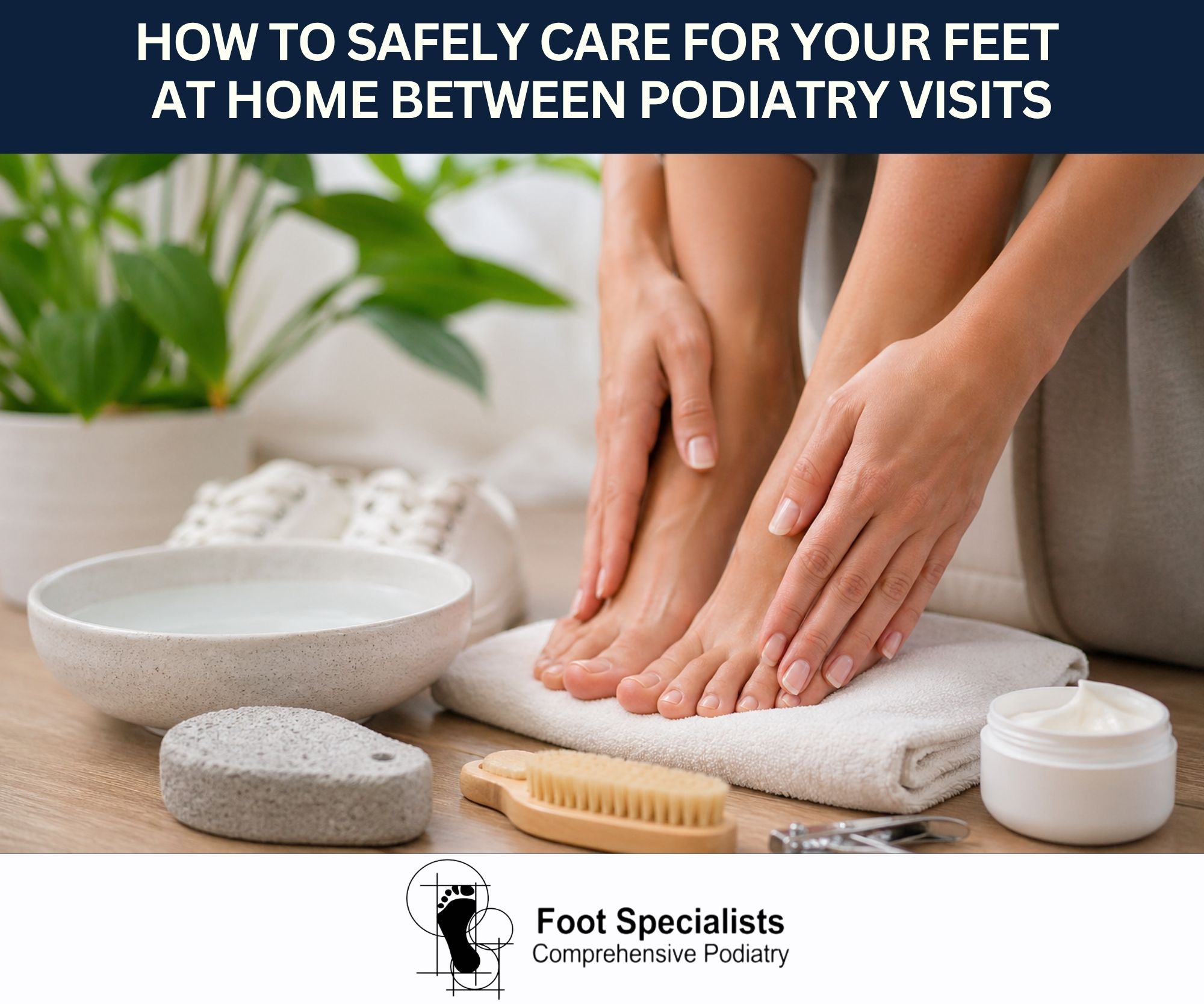
By Comprehensive Podiatry Associates, P.C. Foot Specialists
Your feet carry you through life—literally. Yet they’re often overlooked until pain or discomfort appears. While regular visits to a podiatrist are essential for maintaining optimal foot health, what you do between appointments matters just as much. At Comprehensive Podiatry Associates, P.C. Foot Specialists, we believe that proper at-home foot care can prevent many common conditions and support long-term mobility and comfort.
In this guide, we’ll walk you through safe, effective ways to care for your feet at home—without risking injury or worsening underlying conditions.
Why At-Home Foot Care Matters
Your feet endure constant pressure, friction, and exposure to bacteria. Without proper care, small issues like dry skin or minor irritation can escalate into more serious problems such as infections, ulcers, or chronic pain—especially for individuals with diabetes or circulatory issues.
Consistent at-home care helps:
- Prevent infections and fungal conditions
- Reduce pain and inflammation
- Maintain healthy skin and nails
- Detect early warning signs of foot problems
- Support overall mobility and balance
Safe and Effective At-Home Foot Care Tips
1. Inspect Your Feet Daily
Take a few minutes each day to examine your feet, especially the soles and between the toes. Look for:
- Cuts, blisters, or sores
- Redness or swelling
- Nail discoloration
- Cracked or peeling skin
Early detection is key to preventing complications.
2. Keep Your Feet Clean and Dry
Wash your feet daily with warm (not hot) water and mild soap. Dry thoroughly—especially between the toes—to prevent fungal infections like athlete’s foot.
Pro Tip: Avoid soaking your feet for long periods, as this can dry out your skin and lead to cracks.
3. Moisturize—But Carefully
Apply a quality foot cream or lotion to keep skin soft and prevent cracking. Focus on the heels and soles.
Important: Do NOT apply lotion between your toes, as excess moisture in these areas can encourage fungal growth.
4. Trim Toenails Properly
Cut your toenails straight across and avoid rounding the corners. This helps prevent painful ingrown toenails.
- Use clean, sharp nail clippers
- Avoid cutting nails too short
- File rough edges gently
If you have difficulty reaching your feet or have thickened nails, seek professional care instead of attempting it yourself.
5. Choose Proper Footwear
Wearing the right shoes is crucial for foot health.
Look for:
- Proper arch support
- Adequate cushioning
- A roomy toe box
- Breathable materials
Avoid tight, narrow, or high-heeled shoes that place excessive pressure on your feet.
6. Wear Clean, Dry Socks
Choose moisture-wicking socks made from materials like cotton blends or wool. Change socks daily—or more often if your feet sweat heavily.
7. Avoid DIY “Bathroom Surgery”
It can be tempting to treat corns, calluses, or ingrown nails yourself—but this can lead to infection or injury.
Avoid:
- Cutting corns or calluses with sharp tools
- Using over-the-counter acid treatments without guidance
- Attempting to dig out ingrown nails
Always consult a podiatrist for safe treatment.
8. Stay Active and Maintain Circulation
Regular movement improves blood flow to your feet. Simple exercises like walking, stretching, or rotating your ankles can help maintain circulation.
9. Manage Chronic Conditions
If you have diabetes, arthritis, or vascular disease, proper foot care is even more critical. Follow your doctor’s recommendations closely and never ignore minor issues.
When to See a Podiatrist
Even with excellent at-home care, some conditions require professional attention. Schedule an appointment if you experience:
- Persistent foot or heel pain
- Signs of infection (redness, warmth, pus)
- Thickened, discolored, or painful nails
- Open sores or wounds that don’t heal
- Numbness or tingling
The team at Comprehensive Podiatry Associates, P.C. Foot Specialists is here to provide expert diagnosis and treatment tailored to your needs.
Frequently Asked Questions (Q&A)
Q: How often should I wash my feet?
A: Once daily is typically sufficient. Be sure to dry thoroughly, especially between the toes.
Q: Is it safe to remove calluses at home?
A: Light filing with a pumice stone is generally safe, but avoid cutting or using chemical treatments without professional guidance.
Q: What’s the best way to prevent athlete’s foot?
A: Keep feet clean and dry, wear breathable shoes, change socks regularly, and avoid walking barefoot in public areas like locker rooms.
Q: Can I treat an ingrown toenail myself?
A: Mild cases may improve with proper nail trimming and soaking, but recurring or painful ingrown nails should be treated by a podiatrist.
Q: Why do my heels crack, and how can I fix them?
A: Dry skin and pressure can cause heel cracks. Regular moisturizing and wearing supportive footwear can help. Severe cracks may need medical treatment.
Q: What type of shoes are best for everyday wear?
A: Supportive, well-fitting shoes with cushioning and a wide toe box are ideal. Avoid shoes that are too tight or lack arch support.
Q: Are foot soaks beneficial?
A: Short soaks can help relax your feet, but prolonged soaking may dry out the skin. Always moisturize afterward.
Q: When should diabetics see a podiatrist?
A: Diabetic patients should have regular foot exams and seek immediate care for any cuts, blisters, or changes in skin or nail condition.
Trust Your Feet to the Experts
At Comprehensive Podiatry Associates, P.C. Foot Specialists, we are committed to helping you maintain healthy, pain-free feet—both in our office and at home. Whether you need routine care or advanced treatment, our experienced team is here to support you every step of the way.
Contact Information
Comprehensive Podiatry Associates, P.C. Foot Specialists
East Setauket Location:
35 Shore Road
East Setauket, NY 11733
Phone: (631) 689-0202
Selden Location:
871 Middle Country Road
Selden, NY 11784
Phone: (631) 451-1125
Website: nycompod.com