By Comprehensive Podiatry Associates, P.C. Foot Specialists
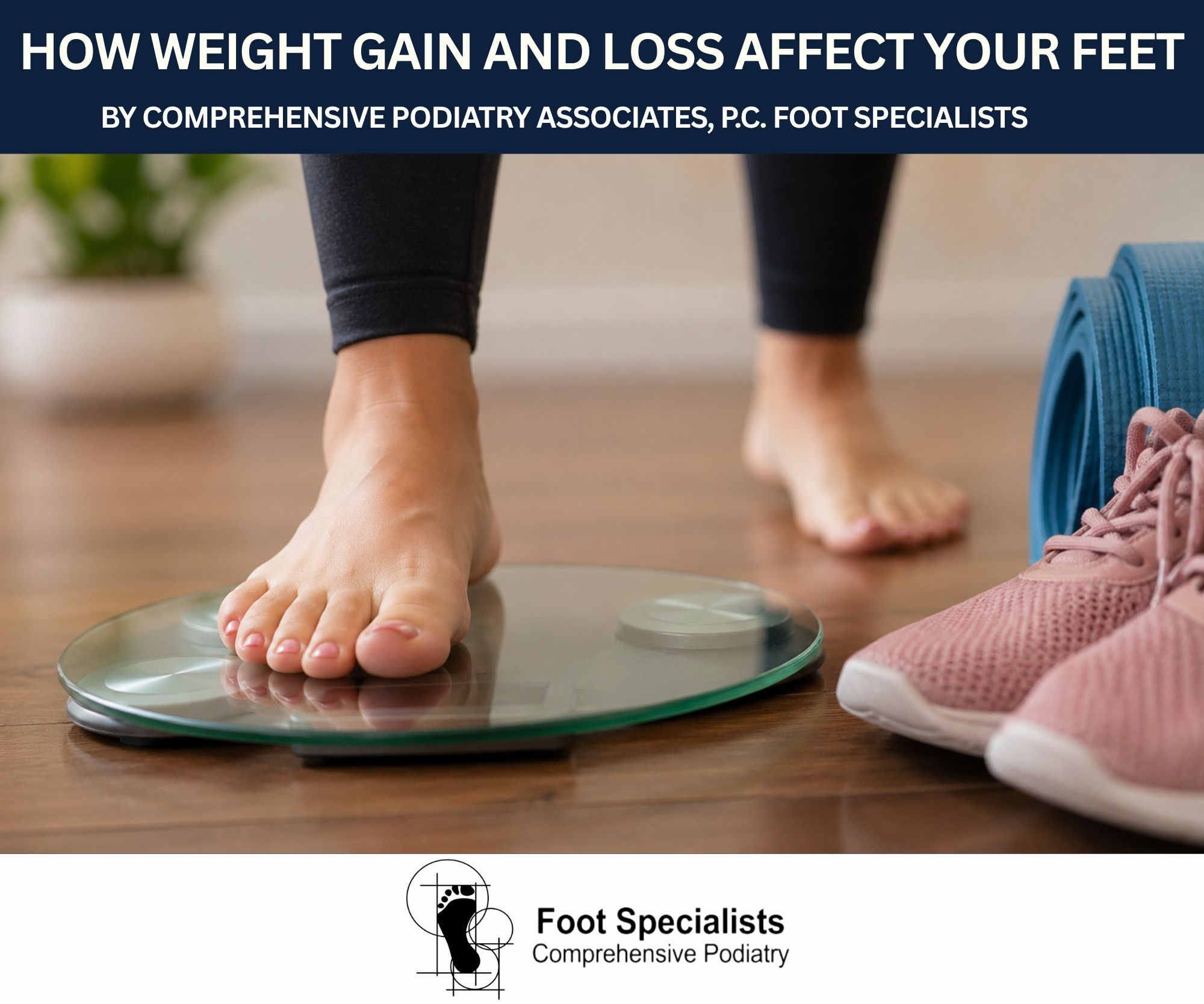
Your feet are the foundation of your body—supporting your weight, absorbing impact, and enabling movement throughout your daily life. When your body weight changes, whether through gain or loss, your feet are among the first areas to feel the effects. At Comprehensive Podiatry Associates, P.C. Foot Specialists, we frequently help patients understand how weight fluctuations impact foot health and what can be done to prevent pain and long-term complications.
Understanding the Relationship Between Body Weight and Foot Health
Each step you take places pressure on your feet—often several times your body weight. Even small changes on the scale can significantly alter how your feet function. Increased weight adds stress to bones, joints, ligaments, and soft tissues, while weight loss can shift biomechanics and reduce cushioning.
How Weight Gain Affects Your Feet
1. Increased Pressure and Pain
Extra body weight increases the load placed on your feet, particularly the heels and balls of the feet. This can lead to:
- Heel pain
- Forefoot pain (metatarsalgia)
- General foot fatigue
2. Higher Risk of Plantar Fasciitis
Weight gain is strongly linked to plantar fasciitis, a painful condition involving inflammation of the tissue along the bottom of the foot. The added strain can cause microtears and chronic discomfort.
3. Flattening of the Arches
Excess weight can weaken the ligaments that support your arches, leading to:
- Flat feet (fallen arches)
- Overpronation (inward rolling of the foot)
- Increased risk of ankle, knee, and hip issues
4. Increased Risk of Arthritis
Additional stress on joints can accelerate wear and tear, contributing to:
- Osteoarthritis in the foot and ankle
- Joint stiffness and swelling
5. Swelling and Circulation Issues
Weight gain can impair circulation, causing:
- Foot and ankle swelling (edema)
- Discomfort and tightness in shoes
How Weight Loss Affects Your Feet
1. Reduced Pressure and Pain Relief
Losing weight can significantly decrease the stress placed on your feet, often resulting in:
- Reduced heel and arch pain
- Improved mobility and comfort
2. Changes in Foot Shape
Weight loss can alter foot size and structure. Some patients notice:
- Slightly smaller shoe size
- Reduced foot width due to decreased fat padding
3. Loss of Natural Cushioning
Rapid or significant weight loss may reduce the fat pads under your feet, leading to:
- Less shock absorption
- Increased sensitivity when walking or standing
4. Improved Circulation
Weight loss can enhance blood flow, reducing swelling and improving overall foot health.
Common Foot Conditions Linked to Weight Changes
- Plantar fasciitis
- Flat feet
- Achilles tendonitis
- Bunions and hammertoes
- Stress fractures
- Arthritis
Tips to Protect Your Feet During Weight Changes
Wear Supportive Footwear
Choose shoes with proper arch support, cushioning, and stability to reduce strain.
Maintain a Healthy Weight
Gradual, sustainable weight management is best for both overall and foot health.
Use Custom Orthotics
Custom orthotics can help redistribute pressure and improve foot alignment.
Stretch and Strengthen
Regular stretching and strengthening exercises can improve flexibility and reduce injury risk.
Monitor Foot Pain Early
Don’t ignore discomfort—early treatment can prevent more serious issues.
When to See a Podiatrist
If you experience persistent foot pain, swelling, or changes in foot shape during weight fluctuations, it’s important to seek professional care. Early intervention can prevent long-term damage and keep you moving comfortably.
Comprehensive Q&A Section
Q: Can weight gain cause permanent foot damage?
A: Yes, prolonged excess weight can lead to structural changes such as fallen arches, joint damage, and chronic conditions like arthritis if not addressed early.
Q: How much weight gain affects foot health?
A: Even a gain of 10–20 pounds can increase pressure on your feet significantly, especially over time.
Q: Will losing weight cure plantar fasciitis?
A: Weight loss can reduce symptoms, but additional treatments like stretching, orthotics, or physical therapy may still be necessary.
Q: Can my shoe size change with weight loss?
A: Yes, some people notice a decrease in shoe size or width due to reduced fat padding and swelling.
Q: Why do my feet hurt more after gaining weight?
A: Increased pressure stresses the ligaments, joints, and soft tissues, leading to inflammation and pain.
Q: Is foot pain a sign I need to lose weight?
A: It can be a contributing factor. A podiatrist can help determine whether weight is impacting your foot health.
Q: Are orthotics helpful for weight-related foot pain?
A: Absolutely. Custom orthotics can redistribute pressure and provide support, reducing pain and preventing further issues.
Q: Can rapid weight loss harm my feet?
A: Yes, losing weight too quickly can reduce cushioning in your feet, potentially causing discomfort or sensitivity.
Contact Comprehensive Podiatry Associates, P.C. Foot Specialists
East Setauket Location:
35 Shore Road
East Setauket, NY 11733
Phone: (631) 689-0202
Selden Location:
871 Middle Country Road
Selden, NY 11784
Phone: (631) 451-1125
Website: nycompod.com