Foot calluses and corns are common foot problems that can cause discomfort, pain, and even difficulty walking. While they are often harmless, untreated calluses and corns can lead to complications, especially for individuals with diabetes or poor circulation. At Comprehensive Podiatry Associates, P.C. Foot Specialists, we offer expert care and treatment to help you maintain healthy, pain-free feet.
Understanding Foot Calluses and Corns
What Are Calluses?
Calluses are thickened, hardened areas of skin that develop due to repeated friction or pressure. They commonly form on the heels, soles, and balls of the feet. Calluses serve as a protective barrier for the skin but can become painful when they grow too thick.
What Are Corns?
Corns are small, circular areas of thickened skin that usually develop on the tops or sides of toes. They can be hard (firm and dense) or soft (moist and rubbery due to perspiration). Corns are more likely to cause pain than calluses, particularly when pressed against a shoe.
Causes of Calluses and Corns
- Ill-fitting Shoes: Shoes that are too tight or too loose can increase friction and pressure on the feet.
- High Heels: These shoes can force excessive pressure onto certain areas of the foot, leading to calluses and corns.
- Frequent Walking or Running: Athletes and people who walk or stand for long hours are more prone to developing calluses.
- Foot Deformities: Conditions such as hammertoes, bunions, or flat feet can lead to abnormal pressure points, increasing the risk of calluses and corns.
- Lack of Socks or Protective Padding: Going barefoot or wearing shoes without socks can contribute to excessive friction and skin thickening.
Treatment Options for Calluses and Corns
At-Home Remedies
If your calluses and corns are mild and not causing significant discomfort, you can try the following home remedies:
- Soaking Your Feet: Soak your feet in warm, soapy water for about 10-15 minutes to soften the thickened skin.
- Exfoliating: Gently rub the affected areas with a pumice stone or foot file to remove dead skin.
- Moisturizing: Apply a foot cream containing urea or salicylic acid to keep the skin soft and prevent excessive thickening.
- Wearing Proper Footwear: Choose well-fitting shoes with adequate arch support and cushioning to prevent pressure and friction.
- Using Protective Pads: Non-medicated corn or callus pads can reduce pressure and prevent worsening of the condition.
Professional Treatment
If home remedies don’t provide relief, or if the calluses and corns are painful and persistent, professional podiatric care is recommended. Treatment options at Comprehensive Podiatry Associates, P.C. Foot Specialists include:
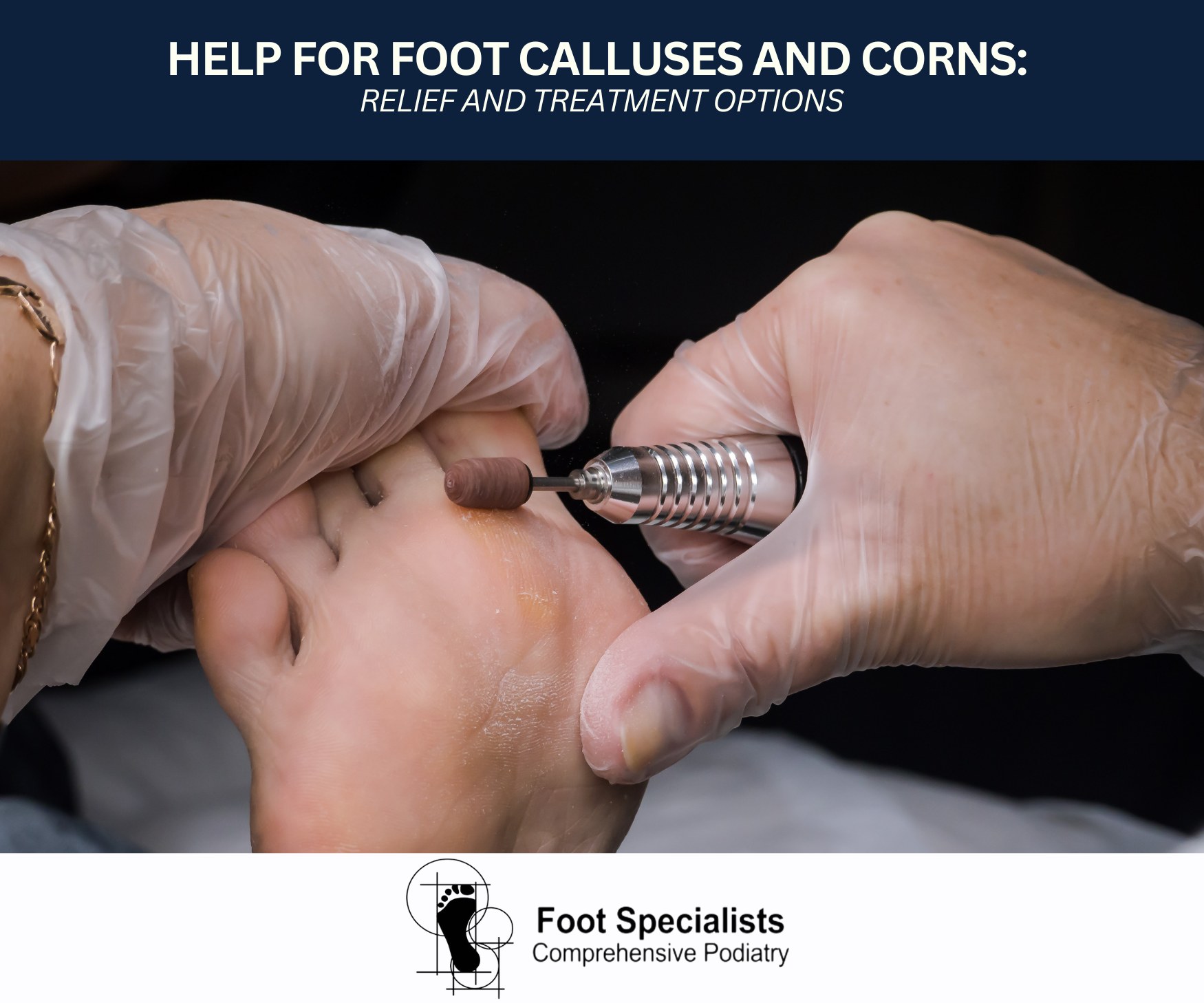
- Debridement: A podiatrist carefully trims or shaves down thickened skin using sterile medical tools.
- Custom Orthotics: Specially designed shoe inserts can help distribute pressure evenly and prevent recurrent calluses and corns.
- Medications: Prescription-strength salicylic acid treatments may be recommended to soften and remove calluses and corns.
- Surgical Correction: If foot deformities are causing chronic issues, corrective surgery may be necessary to realign the bones and relieve pressure points.
Q&A: Common Questions About Foot Calluses and Corns
Q: Are calluses and corns the same thing?
A: No, while both are caused by friction and pressure, calluses are larger, less painful, and typically develop on the soles of the feet, whereas corns are smaller, more localized, and can be painful, especially on toe joints.
Q: Are calluses and corns dangerous?
A: In most cases, they are harmless. However, for people with diabetes, poor circulation, or nerve damage, they can lead to ulcers or infections. It is essential to monitor them and seek medical attention if they become painful, inflamed, or infected.
Q: Should I cut my calluses or corns at home?
A: No, it’s not recommended to cut or shave them at home, as it can lead to infections or wounds. A podiatrist can safely remove them in a sterile environment.
Q: Can I prevent calluses and corns from coming back?
A: Yes! Wearing properly fitted shoes, using padded insoles, keeping your feet moisturized, and regularly exfoliating can help prevent their recurrence.
Q: When should I see a podiatrist for my calluses or corns?
A: You should seek professional care if:
- You have diabetes or circulation problems.
- The callus or corn is painful, inflamed, or showing signs of infection.
- Home treatments are not working.
- You experience recurrent calluses and corns despite wearing proper footwear.
Contact Comprehensive Podiatry Associates, P.C. Foot Specialists
If you’re struggling with painful calluses or corns, don’t wait for them to worsen. Our expert team at Comprehensive Podiatry Associates, P.C. Foot Specialists is here to help you find relief and prevent future issues.
📍 East Setauket Location
35 Shore Road
East Setauket, NY 11733
📞 Phone: (631) 689-0202
📍 Selden Location
871 Middle Country Road
Selden, NY 11784
📞 Phone: (631) 451-1125
Call us today to schedule an appointment and take the first step toward healthier, pain-free feet!