A Comprehensive Guide from Comprehensive Podiatry Associates, P.C. Foot Specialists
Choosing the right athletic shoes is one of the most important decisions you can make for your foot health, performance, and injury prevention. Whether you’re a runner, basketball player, tennis enthusiast, or simply enjoy staying active, the wrong footwear can lead to discomfort, chronic pain, and even long-term damage.
At Comprehensive Podiatry Associates, P.C. Foot Specialists, our team regularly treats patients dealing with foot and ankle problems caused by improper footwear. This guide will help you understand how to select the best athletic shoes tailored to your sport and your unique foot structure.
Why Proper Athletic Shoes Matter
Athletic shoes are not just about style—they are designed to support specific movements, absorb impact, and stabilize your feet. Wearing the wrong type of shoe can lead to:
- Plantar fasciitis
- Achilles tendonitis
- Stress fractures
- Shin splints
- Knee, hip, and lower back pain
Proper footwear enhances performance while reducing your risk of injury.
Key Factors to Consider When Choosing Athletic Shoes
1. Match the Shoe to Your Sport
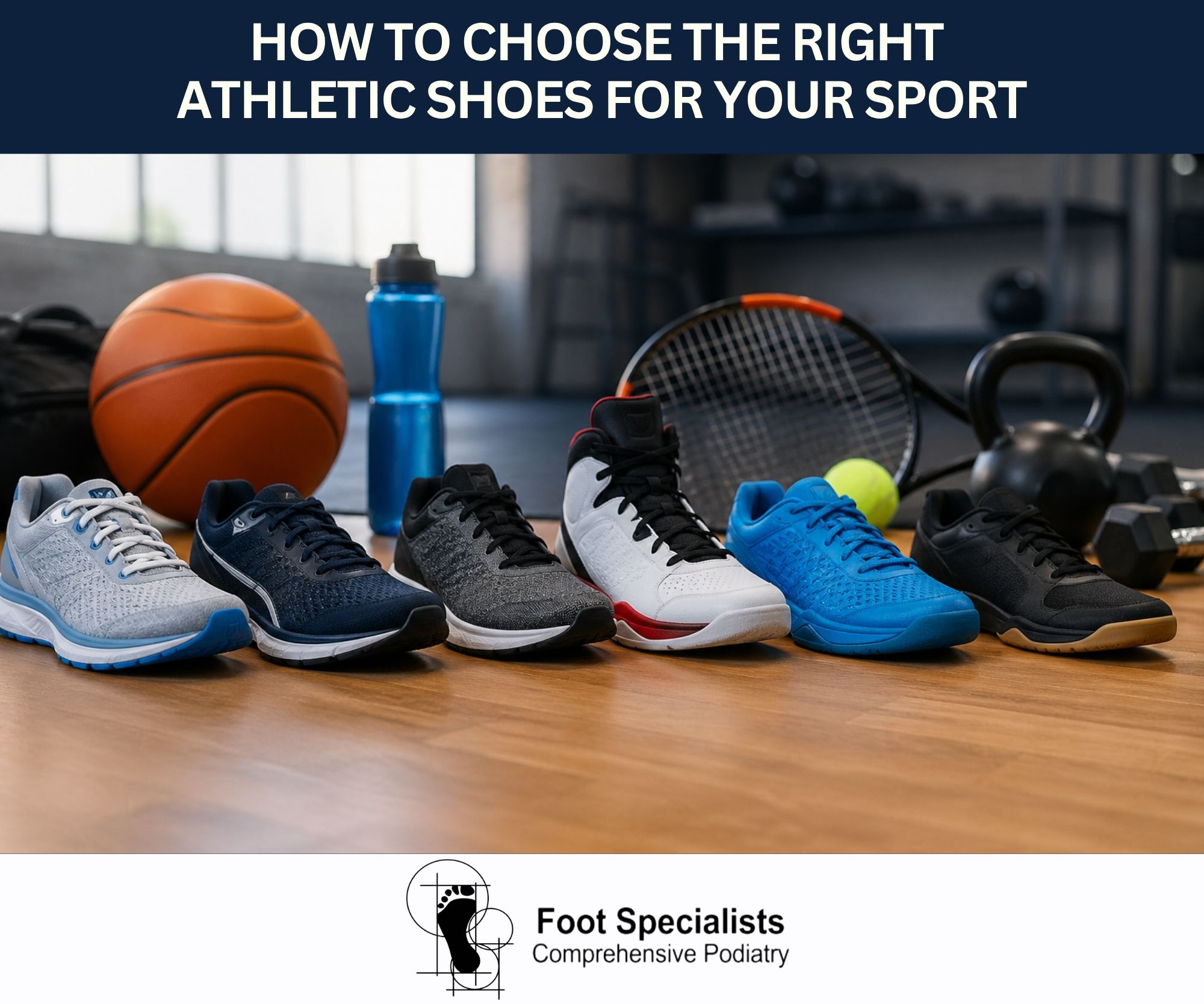
Different sports require different types of support and motion control:
- Running Shoes: Designed for forward motion, cushioning, and shock absorption
- Basketball Shoes: High-top or mid-top for ankle support and lateral movement
- Tennis Shoes: Built for side-to-side motion and quick pivots
- Cross-Training Shoes: Versatile support for gym workouts and varied movement
- Walking Shoes: Lightweight with flexibility and cushioning
Choosing sport-specific shoes ensures your feet are protected during the exact movements you perform.
2. Understand Your Foot Type
Your arch type plays a major role in determining the right shoe:
- Flat Feet (Low Arches): Need motion control or stability shoes
- Neutral Arches: Can wear a wide range of cushioned shoes
- High Arches: Require extra cushioning and shock absorption
A podiatrist can evaluate your foot structure and gait for a precise recommendation.
3. Get the Right Fit
Even the best shoe won’t help if it doesn’t fit properly. Keep these tips in mind:
- Measure your feet regularly (they can change over time)
- Try shoes on in the afternoon when feet are slightly swollen
- Leave about a thumb’s width of space at the toe
- Ensure a snug fit in the heel without slipping
Never assume your size is the same across all brands.
4. Prioritize Comfort Over Style
While aesthetics matter, comfort and support should always come first. A good athletic shoe should feel comfortable immediately—there should be no “break-in period.”
5. Replace Shoes Regularly
Athletic shoes lose their support over time. As a general rule:
- Running shoes: Replace every 300–500 miles
- Training shoes: Replace every 6–12 months depending on use
Worn-out shoes can increase your risk of injury.
6. Consider Custom Orthotics
If you experience chronic pain or have structural foot issues, custom orthotics prescribed by a podiatrist can provide:
- Improved alignment
- Better shock absorption
- Enhanced comfort
Common Mistakes to Avoid
- Wearing the same shoes for multiple sports
- Choosing shoes based on brand alone
- Ignoring foot pain or discomfort
- Buying shoes that are too tight or too loose
- Delaying replacement of worn-out footwear
When to See a Podiatrist
If you experience persistent foot or ankle pain, it’s important to seek professional care. At Comprehensive Podiatry Associates, P.C. Foot Specialists, we provide expert evaluations, gait analysis, and personalized treatment plans to keep you active and pain-free.
Frequently Asked Questions (Q&A)
Q: How do I know if my shoes are causing foot pain?
A: If you notice pain during or after activity, especially in the heel, arch, or toes, your shoes may lack proper support or cushioning.
Q: Are expensive athletic shoes always better?
A: Not necessarily. The best shoe is one that fits your foot type, activity, and comfort needs—not just the price tag.
Q: Should I buy shoes online or in-store?
A: In-store is ideal because you can try them on and ensure proper fit. If buying online, stick with brands you’ve worn before.
Q: Can I use running shoes for other sports?
A: Running shoes are designed for forward motion and may not provide adequate support for lateral movements in sports like tennis or basketball.
Q: What are signs I need new athletic shoes?
A: Worn-out soles, reduced cushioning, uneven tread wear, or new foot pain are all signs it’s time for a replacement.
Q: Do orthotics replace the need for good shoes?
A: No. Orthotics enhance support but should be used with properly fitted, high-quality shoes.
Q: How often should I get my feet evaluated?
A: If you’re active or experiencing discomfort, annual evaluations—or sooner if symptoms arise—are recommended.
Contact Comprehensive Podiatry Associates, P.C. Foot Specialists
East Setauket Location:
35 Shore Road
East Setauket, NY 11733
Phone: (631) 689-0202
Selden Location:
871 Middle Country Road
Selden, NY 11784
Phone: (631) 451-1125
Website: nycompod.com